Master AI Agent Creation: A Practical Guide to Building Autonomous Agents
Jan 6, 2026
Ella
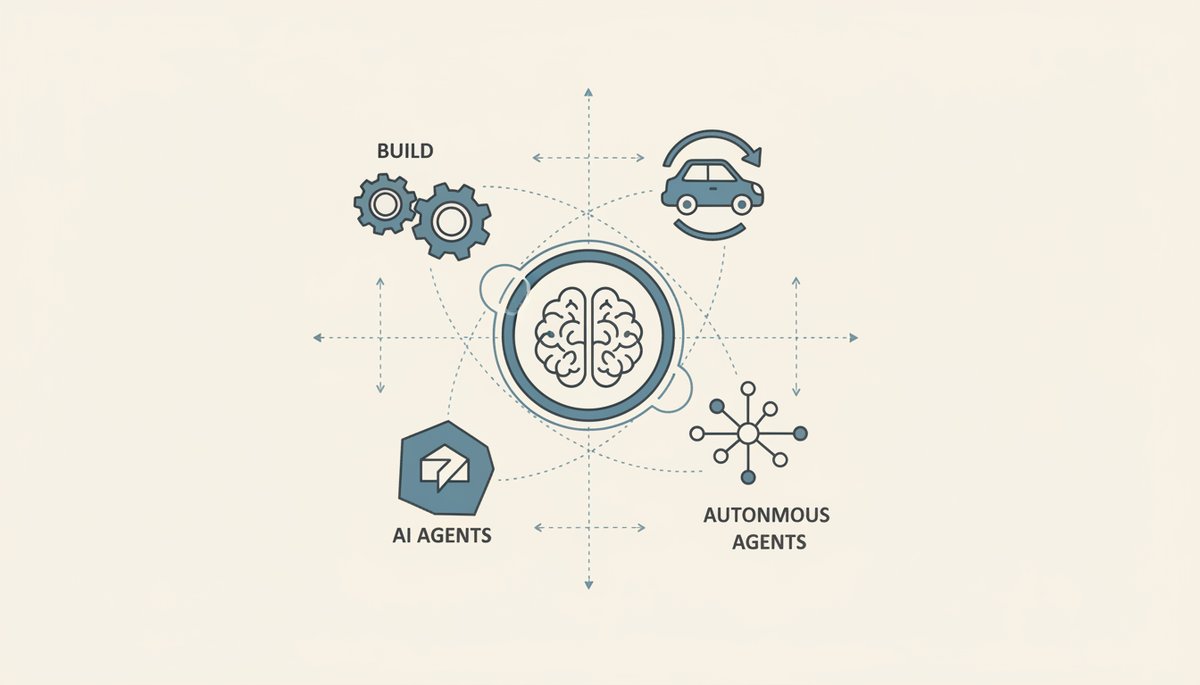
Build powerful AI agents! Learn the secrets to autonomous agent creation with our practical guide. Boost efficiency & automate complex tasks with step-by-step instructions for developers.
Imagine a world where software proactively anticipates your needs, learns from every interaction, and tackles complex problems with minimal human intervention. That's the exciting reality powered by AI Agents, and it's no longer a futuristic fantasy. From revolutionizing customer service to accelerating drug discovery, these intelligent entities are poised to reshape industries as we know them. The ability to build AI Agent solutions is becoming increasingly accessible, and the time to explore this groundbreaking technology is now.
This blog post serves as your comprehensive guide to the captivating world of AI Agents. Whether you're a seasoned developer, a budding software engineer, or simply an AI enthusiast, we'll equip you with the knowledge and practical steps to design, develop, and deploy AI Agents that solve real-world problems. Get ready to unlock the power of Autonomous Agents and embark on a journey to build truly intelligent systems.
What Exactly Are AI Agents? Defining the Core Concepts
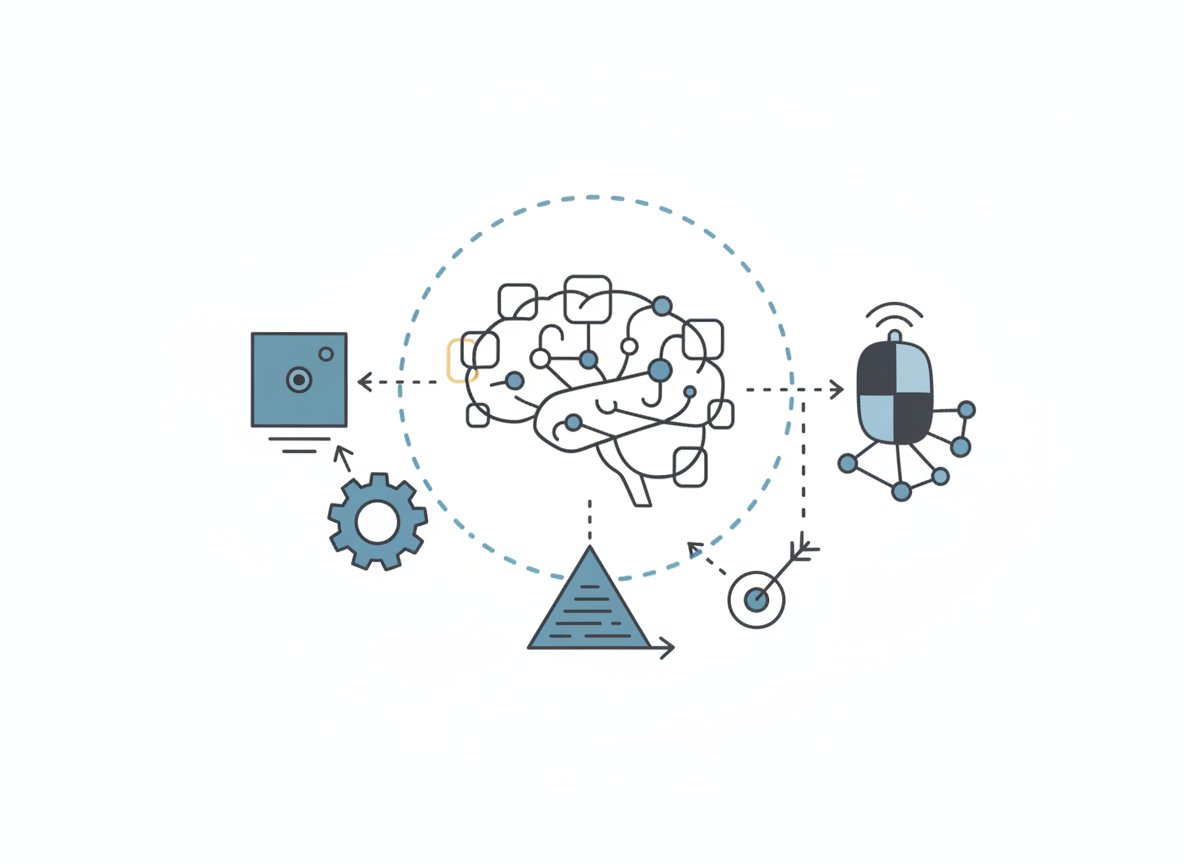
At its core, an AI Agent is an intelligent entity that perceives its environment, makes decisions, and takes actions to achieve a specific goal. Unlike traditional software, which operates on predefined rules and inputs, AI agents can learn, adapt, and reason in dynamic and unpredictable environments. This adaptability makes them powerful tools for addressing complex and evolving challenges.
Understanding the Key Characteristics of AI Agents:
Autonomy: A defining characteristic of Autonomous Agents is their ability to operate independently, without constant human oversight. They can make decisions and take actions based on their own reasoning and learning, within pre-defined ethical and safety boundaries.
Reactivity: AI agents possess the ability to perceive their environment through sensors (e.g., cameras, microphones, APIs) and react to changes in a timely manner. This allows them to respond to unexpected events and adapt their behavior accordingly.
Proactiveness: Unlike reactive systems, AI agents can take initiative and pursue goals proactively. They can anticipate future needs, plan ahead, and take actions to achieve their objectives, even in the absence of immediate stimuli.
Social Ability: Many AI agents are designed to interact and communicate with other agents (both artificial and human). This social ability allows for collaboration, negotiation, and coordinated problem-solving in complex environments. This is especially crucial in multi-agent systems.
AI Agents vs. Traditional Software: Key Differences & Advantages:
Traditional software typically follows a rigid, pre-programmed set of instructions. It excels at performing repetitive tasks but struggles to adapt to changing circumstances or handle unforeseen events. In contrast, AI Agents offer several key advantages:
Adaptability: AI agents can learn from experience and adapt their behavior in response to new information or changing environments. This makes them ideal for dynamic and unpredictable situations.
Learning: By leveraging AI/ML models, agents learn from vast datasets, enabling them to identify patterns, make predictions, and improve their performance over time. This learning capability is a core differentiator.
Reasoning: AI agents can reason about their environment, evaluate different options, and make informed decisions based on their goals and knowledge.
Flexibility: AI agents can be easily reconfigured and redeployed to address new challenges or adapt to changing requirements.
The core difference lies in the intelligence provided by AI/ML models. These models allow AI Agents to perceive, learn, and reason, empowering them to make intelligent decisions in ways traditional software simply cannot.
Different Types of AI Agents: A Quick Overview:
Understanding the different types of AI agents is crucial for selecting the appropriate architecture for your specific application.
Simple Reflex Agents: These agents react solely based on the current percept. They use a set of condition-action rules to determine their actions. This is the simplest type of agent, suitable for environments where the state is fully observable and predictable.
Model-Based Reflex Agents: These agents maintain an internal state that represents the environment's history and current state. They use this model to predict the consequences of their actions and choose the best course of action. This type of agent is more robust than simple reflex agents, as it can handle partially observable environments.
Goal-Based Agents: These agents aim to achieve specific goals. They use search and planning algorithms to find a sequence of actions that will lead to the desired outcome. They must understand the effects of their actions and have a clear definition of what constitutes success.
Utility-Based Agents: These agents optimize utility, a measure of the agent's overall satisfaction. They consider not only whether a goal is achieved but also how efficiently and effectively it is achieved. This allows them to make decisions that maximize their overall well-being.
Choosing the Right AI Agent Framework: Tools and Technologies
Selecting the right framework is crucial for efficient AI Agent Development. Numerous tools are available, each with its strengths and weaknesses. This section highlights some of the most popular options.
Exploring Popular AI Agent Frameworks:
LangChain: LangChain is a popular framework designed for building applications powered by Large Language Models (LLMs). Its modular architecture allows developers to easily compose different components, such as language models, prompts, chains, and agents, to create complex AI applications. Its strength lies in its versatility and support for a wide range of LLMs. With LangChain, you can create agents capable of understanding and responding to natural language, generating creative content, and even interacting with external tools and APIs. It's great for LLM orchestration.
AutoGen: Microsoft's AutoGen is designed to enable the development of conversational AI agents and multi-agent workflows. It facilitates building complex AI systems by allowing multiple agents to interact and collaborate with each other. It supports various interaction patterns, including conversations, code execution, and human-in-the-loop workflows. AutoGen excels in creating collaborative systems where multiple agents work together to solve complex problems.
CrewAI: CrewAI is a framework for orchestrating role-playing, autonomous AI agents. It's designed to enable agents to work together cohesively in project based solutions. It focuses on making the agents feel like a team, giving them tools and a structure to work within.
Other emerging frameworks:
TensorFlow Agents: A library for reinforcement learning, providing tools for training and deploying agents in a variety of environments.
PyTorch Lightning: A lightweight framework for PyTorch that simplifies the training of complex AI models, including those used in AI agents.
Essential Technologies for AI Agent Development:
Programming Languages: Python is the dominant language for AI/ML development due to its extensive libraries and frameworks. Other languages like Java or C++ might be used for performance-critical components.
Machine Learning Libraries: TensorFlow, PyTorch, and Scikit-learn are essential for building and training AI/ML models that power agent capabilities. These libraries provide a wide range of algorithms and tools for tasks such as classification, regression, clustering, and reinforcement learning.
Natural Language Processing (NLP) Tools: Hugging Face Transformers and NLTK are crucial for enabling agents to understand and generate natural language. These tools provide pre-trained language models and utilities for tasks such as text classification, sentiment analysis, and machine translation.
Vector Databases: Pinecone, ChromaDB, and Weaviate are specialized databases designed to store and retrieve high-dimensional vector embeddings. These databases are essential for implementing memory and knowledge retrieval in AI agents, allowing them to access and reason about vast amounts of information.
Evaluating Frameworks: A Checklist for Your Project:
Before committing to a specific framework, consider the following factors:
Ease of Use and Learning Curve: How easy is it to learn and use the framework? Is the documentation clear and comprehensive?
Scalability and Performance: Can the framework handle the expected workload and scale to meet future demands?
Community Support and Documentation: Is there a strong community that can provide support and assistance? Is the documentation up-to-date and well-maintained?
Specific Feature Requirements: Does the framework provide the specific features and capabilities required for your project, such as LLM integration, planning capabilities, or multi-agent support?
Cost: Are there any licensing fees or other costs associated with using the framework?
Building Your First AI Agent: A Step-by-Step Guide
Let's get practical! This section provides a step-by-step guide to building your first AI agent.
Defining Your Agent's Goal and Environment:
Clearly state the agent's objective: What problem is the agent trying to solve? What should the agent accomplish? Be as specific as possible. For example, "The agent should answer customer inquiries about product availability."
Define the environment in which the agent will operate: Is it a simulated environment or a real-world environment? What are the characteristics of the environment? For example, "The agent will operate in a customer service chat application."
Identify the agent's available actions and sensory inputs: What actions can the agent take? What information can the agent perceive from the environment? For example, "The agent can send messages, search the product database, and access customer information. It can receive text messages from customers."
Designing the Agent's Architecture:
Choose the appropriate agent type: Based on the complexity of the problem and the characteristics of the environment, select the most appropriate agent type (reflex, model-based, goal-based, etc.). For example, a model-based agent might be suitable for a customer service application, as it needs to maintain a context of the conversation.
Select the necessary AI/ML components: Identify the AI/ML components that the agent will need to perform its tasks. This might include a perception module (for processing sensory inputs), a planning module (for generating plans of action), and an action selection module (for choosing the best action to take).
Outline the flow of information and control within the agent: How will the different components of the agent interact with each other? How will information flow from the environment to the agent and back?
Implementing and Training Your Agent:
Write the code for the agent's components: Implement the code for each of the agent's components, using the chosen programming language and AI/ML libraries.
Choose appropriate training data and methods: Select the appropriate training data and methods to train the agent to achieve its goal within the environment. This might involve supervised learning (using labeled data), reinforcement learning (using rewards and penalties), or a combination of both.
Train the agent to achieve its goal within the environment: Train the agent using the chosen training data and methods, monitoring its performance and adjusting the training process as needed.
AI Agent Examples: Showcasing Real-World Applications
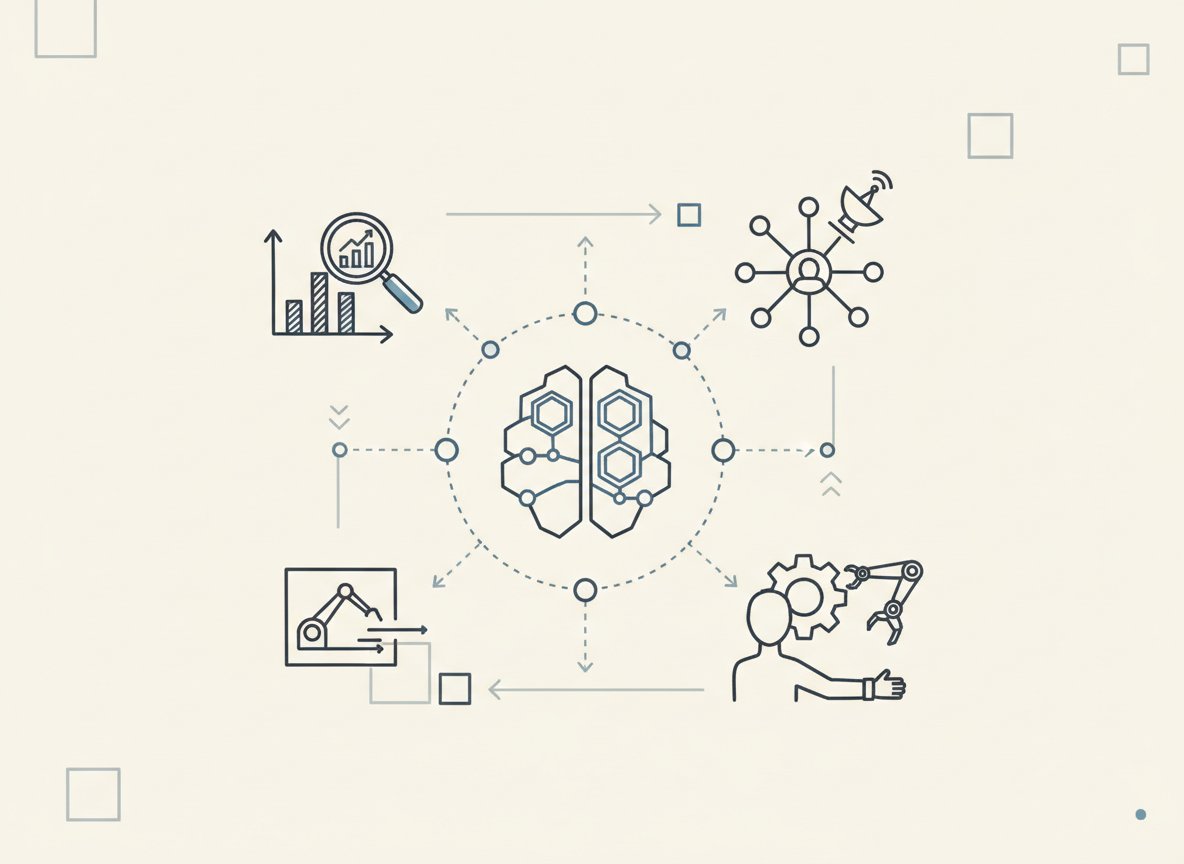
The potential applications of AI Agents are vast and span numerous industries. Here are a few compelling AI Agent Examples:
AI Agents in Customer Service: Chatbots and Virtual Assistants:
AI-powered chatbots are transforming customer service by providing instant and personalized support.
They can handle a wide range of inquiries, resolve issues, and guide customers through complex processes.
Technologies used include NLP for understanding customer intent, knowledge graphs for accessing relevant information, and machine learning for personalizing interactions.
Examples: An AI chatbot that answers frequently asked questions about shipping policies or helps customers track their orders. Another example might be a virtual assistant that helps customers troubleshoot technical issues with their products.
AI Agents in Healthcare: Diagnosis and Personalized Treatment:
AI agents can assist doctors with diagnosis and treatment planning by analyzing medical images, patient data, and research literature.
They can provide personalized medicine recommendations based on individual patient characteristics.
Remote patient monitoring and telehealth applications are also benefiting from AI agents that can track vital signs, detect anomalies, and provide timely interventions.
Examples: An AI agent that analyzes medical images to detect early signs of cancer or a virtual assistant that provides patients with personalized medication reminders and health tips.
AI Agents in Finance: Fraud Detection and Algorithmic Trading:
AI agents are used to identify and prevent fraudulent transactions by analyzing patterns in financial data.
Algorithmic trading strategies are optimized for profitability using AI agents that can learn from market data and execute trades automatically.
Risk assessment and portfolio management are also benefiting from AI agents that can analyze market trends and make informed investment decisions.
Examples: An AI agent that detects suspicious credit card transactions or an algorithmic trading system that automatically buys and sells stocks based on market conditions.
These examples highlight the versatility of AI agents and their ability to solve real-world problems across diverse industries. Leverage these examples as inspiration for your own Build AI Agent projects!
Deploying and Monitoring Your AI Agent: Ensuring Success
Deploying and monitoring your AI Agent are critical steps to ensure its success.
Deployment Strategies: Choosing the Right Infrastructure:
Cloud-based deployment options: AWS, Azure, and Google Cloud provide robust and scalable infrastructure for deploying AI agents.
On-premise deployment considerations: Consider on-premise deployment if you require strict control over data and infrastructure.
Containerization with Docker and orchestration with Kubernetes: Use Docker to containerize your agent and Kubernetes to orchestrate its deployment and scaling.
Monitoring and Evaluation: Tracking Performance and Identifying Issues:
Define key performance indicators (KPIs): Establish metrics to track agent performance, such as accuracy, response time, and user satisfaction.
Implement monitoring tools: Use tools to track agent behavior and performance in real-time.
Establish procedures for identifying and resolving errors: Develop a process for identifying and addressing errors or unexpected behavior.
Iterative Improvement: Continuously Learning and Adapting:
Collect data on agent performance and user feedback: Gather data on how the agent is performing and solicit feedback from users.
Refine the agent's model and architecture: Based on the collected data, refine the agent's model and architecture to improve its performance.
Implement a feedback loop: Establish a feedback loop to ensure continuous improvement of the agent.
Best Practices for Building Effective and Ethical AI Agents
Building effective and ethical AI Agents requires careful consideration of safety, reliability, and ethical implications.
Ensuring Safety and Reliability:
Rigorous testing and validation: Thoroughly test and validate the agent's behavior in various scenarios.
Fail-safe mechanisms: Implement fail-safe mechanisms to prevent unintended consequences.
Robust error handling: Design robust error handling and recovery procedures.
Addressing Ethical Considerations:
Transparency and explainability: Make agent decision-making transparent and explainable.
Fairness and bias mitigation: Mitigate bias in AI models to ensure fairness.
Data privacy and security: Protect data privacy and security.
Collaboration and Human Oversight:
Design agents to work effectively with humans: Design agents that complement human capabilities.
Establish clear lines of responsibility: Define clear lines of responsibility and accountability.
Provide mechanisms for human intervention: Provide mechanisms for human intervention and override.
Conclusion: The Future of AI Agents: Empowering a New Era of Automation
As we've explored, AI Agents represent a paradigm shift in software development, offering unprecedented levels of autonomy, adaptability, and intelligence. From streamlining customer service to revolutionizing healthcare, these agents are poised to transform industries and empower a new era of automation. The ability to Build AI Agent solutions is becoming increasingly accessible, paving the way for a future where intelligent systems work alongside humans to solve complex problems and improve our lives. However, responsible and ethical AI agent development is paramount, ensuring that these powerful technologies are used for the benefit of society. The future of AI is intelligent, autonomous, and collaborative.
Call to Action:
Ready to take the plunge and build AI Agent solutions? Start exploring the frameworks and tools discussed in this post.
Explore LangChain, AutoGen, and other emerging AI Agent frameworks.
Experiment with different AI/ML models and techniques.
Join online communities and forums for AI agent developers.
Contribute to open-source AI agent projects.
Ready to build your first AI Agent? Download our free starter kit and begin your journey today!